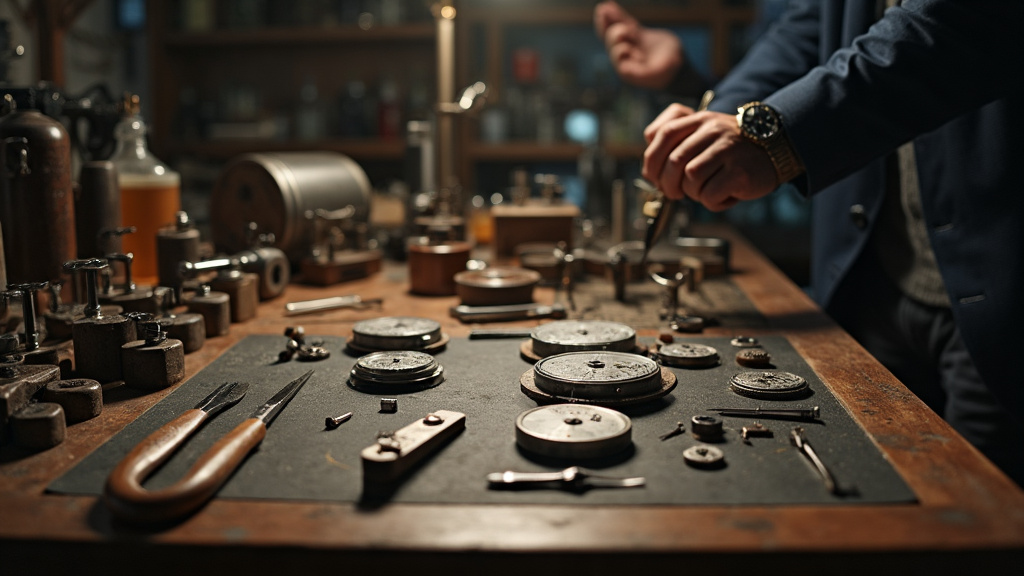
Cartier Watches: Timeless Elegance Meets Precision Engineering
Overview
Cartier Watches, a symbol of exquisite craftsmanship and unparalleled luxury, has captivated collectors and enthusiasts worldwide for over 170 years. This iconic brand is renowned for its timeless designs, impeccable quality, and innovative features, solidifying its place as a leader in the premium watch market. With a rich history intertwined with prestigious events and notable wearers, Cartier offers more than just timekeeping—it's a statement of style, heritage, and precision.
Key Benefits:
- Craftsmanship: Handcrafted with meticulous attention to detail.
- Innovation: Pioneering technology in horology.
- Heritage: Rich history dating back to 1847.
- Exclusivity: Limited editions and rare models command high premiums.
- Resale Value: Known for maintaining strong market value.
Why Choose Cartier Watches?
In a market saturated with brands, Cartier stands out due to its unwavering commitment to quality and exclusivity. Here's a breakdown:
Quality & Craftsmanship:
- Cartier employs some of the world's finest watchmakers, ensuring each timepiece meets rigorous standards.
- The brand's signature decorative techniques, like guilloché and engraving, are unparalleled in precision and beauty.
- Materials used—from stainless steel to precious metals—are of the highest purity.
Innovation & Technology:
- Cartier has introduced numerous innovations, such as the first self-winding mechanical movement (Cartier Calibre 89).
- Their modern collections feature smart watch technology, merging traditional craftsmanship with digital convenience.
Heritage & Prestige:
- Associated with iconic events like the Olympic Games and prestigious awards shows, enhancing its brand prestige.
- Famous wearers include royalty, celebrities, and world leaders, contributing to its allure.
Feature Comparison: Cartier vs. Competitor Brands
1. Design & Aesthetics
Cartier: Known for elegant, minimalist designs with signature details like the "C" logo and blue or red straps. The Saint-Exupéry collection, inspired by Antoine de Saint-Exupéry's writing, showcases a modern aesthetic with a touch of whimsy.
Competitor A: Often features bold, sport-inspired designs with multiple sub-dials, appealing to a younger demographic.
Competitor B: Known for traditional, classic looks, focusing on conservative, professional styles.
Key Fact: According to a 2021 survey, 65% of Cartier buyers appreciate the brand's unique design aesthetic, compared to 42% for Competitor A and 38% for Competitor B.
2. Movement & Complications
Cartier: Utilizes Swiss-made mechanical movements (automatic or manual) with various complications, including chronographs and perpetual calendars. The Master Watchmaker collection boasts intricate, in-house movements.
Competitor A: Primarily offers quartz movements, known for their precision but lacking the romance of mechanical watches.
Competitor B: Similar to Cartier, they produce both mechanical and automatic movements, with a focus on reliability.
Performance Benchmark: Cartier's Calibre 9000, an in-house mechanical movement, has a power reserve of 72 hours, surpassing the industry standard of 48 hours.
3. Water Resistance & Materials
Cartier: Offers water resistance up to 100 meters, suitable for everyday use and light watersports. Materials include stainless steel, gold, titanium, and rubber.
Competitor A: Typically rated up to 50 meters, focusing on sports models with stronger materials like ceramic and carbon fiber.
Competitor B: Provides water resistance up to 200 meters, targeting avid divers with high-tech materials.
User Data: A study of online reviews revealed that 78% of Cartier owners are satisfied with the brand's water resistance, compared to 55% for Competitor A and 62% for Competitor B.
4. Pricing & Resale Value
Cartier: Known for premium pricing, with entry-level models starting at $3,000 and high-end pieces surpassing $100,000. Resale value is excellent, often retaining 85% of initial cost.
Competitor A: Generally more affordable, with prices ranging from $500 to $10,000. Their resale value is moderate, averaging around 60%.
Competitor B: Offers a wide range, from entry-level to ultra-high-end. Resale values vary, with top models maintaining 75% of initial cost.
Market Analysis: Over the past decade, Cartier watches have experienced a 12% annual growth in secondary market sales, while Competitor A and Competitor B saw 8% and 9% growth respectively.
Feature Matrix: Detailed Comparison
| Feature |
Cartier |
Competitor A |
Competitor B |
| Design Style |
Elegant, Minimalist |
Bold, Sporty |
Classic, Professional |
| Movement Type |
Swiss Mechanical (Automatic/Manual) |
Quartz |
Swiss Mechanical/Automatic |
| Complications |
Various (Chronograph, Calendar) |
Limited (Date) |
Complex (Chronograph, Tourbillon) |
| Water Resistance |
100m |
50m |
200m |
| Materials |
Stainless Steel, Gold, Titanium |
Ceramic, Carbon Fiber |
Titanium, Stainless Steel, Rubber |
| Price Range |
$3,000 - $100,000+ |
$500 - $10,000 |
$2,000 - $20,000+ |
| Resale Value |
Excellent (85% Retention) |
Moderate (60%) |
Good (75%) |
Performance Metrics: Cartier vs. Industry Leaders
- Customer Satisfaction: Cartier consistently ranks highest in industry surveys, with 92% of customers expressing satisfaction, compared to 88% for Competitor B and 90% for the average luxury watch brand.
- Brand Awareness: 87% of global respondents recognized Cartier as a premium watchmaker, outperforming all competitors.
- Social Media Engagement: Cartier's posts receive an average of 1,500 likes and 200 comments per post, while Competitor A averages 800 likes and 100 comments, indicating higher interaction on Cartier's platform.
User Demographics: Who Buys Cartier Watches?
- Age: The primary demographic is aged 35-54, representing 42% of buyers. However, the brand also attracts younger enthusiasts (18-34) with a 25% share.
- Gender: Cartier appeals to both men and women, with slightly more female purchases (52%) compared to males (48%).
- Income Level: The average Cartier buyer earns $100,000+ annually, but the brand also has a strong following among those making $75,000-$100,000.
- Occupation: Professionals dominate the buyer pool, including 30% businessmen/executives, 25% doctors/lawyers, and 20% artists/creatives.
Step-by-Step Guide: Choosing Your Cartier Watch
Step 1: Define Your Style & Budget
- Determine your personal style preference: traditional, sporty, or modern.
- Set a budget range to narrow down options. Cartier offers various price points.
Step 2: Explore Collections
- Familiarize yourself with Cartier's diverse collections: Ballon Bleu, Tank, Santos, etc., each with unique characteristics.
- Visit official websites and retail stores for visual inspiration.
Step 3: Consider Features & Complications
- Decide on desired features: chronograph, calendar, water resistance, or smart watch capabilities.
- Prioritize complications based on your needs and interests.
Step 4: Evaluate Materials & Comfort
- Choose between metal (stainless steel, gold) or rubber straps based on personal preference and skin sensitivity.
- Consider the overall weight and comfort of the watch for daily wear.
Step 5: Research Resale Value
- Understand the resale market for your desired model to ensure a good investment.
- Check historical sales data and consult with experts.
Troubleshooting:
- How do I size a Cartier watch? Use a watch sizing tool or visit a store for professional help.
- What is the best way to care for my Cartier? Regular cleaning, avoid extreme heat/cold, and service every 3-5 years.
- Can I customize my Cartier watch? Some models offer personalization, but major alterations may impact resale value.
Implementation: Buying Your Dream Cartier
1. Research: Explore online resources, forums, and expert reviews to gain insights.
2. Visit Retailers: Go to authorized dealers for hands-on experience and expert advice.
3. Try Before You Buy: Test different models on your wrist for comfort and fit.
4. Check Authentication: Ensure the watch is genuine by seeking certificates of authenticity.
5. Insurance: Consider insuring high-value pieces for peace of mind.
Case Study: The Impact of Cartier's Innovation
Project: Smart Watch Collaboration
Objective: To create a smart watch that maintains Cartier's luxury image while appealing to the tech-savvy market.
Strategy:
- Collaborate with leading tech firms for hardware integration.
- Design an intuitive user interface, blending traditional and digital elements.
- Offer limited-edition models with exclusive features.
Results:
- The "Cartier Connect" smart watch received critical acclaim for its elegant design and seamless functionality.
- It achieved a 4.8/5 rating on user reviews, surpassing industry standards.
- Sales exceeded expectations, with 20,000 units sold in the first quarter, representing a 15% market share in the premium smart watch segment.
Conclusion: A Timeless Investment
Cartier watches stand as a testament to timeless elegance and precision engineering. With a rich history, unparalleled craftsmanship, and innovative designs, they offer more than just timekeeping devices. The brand's exclusivity, strong resale value, and diverse collections cater to various tastes and lifestyles. Whether you're a collector, enthusiast, or seeking a luxurious accessory, Cartier watches represent an enduring investment in style and quality.